


The First Aid Kit Requirement Hiding in Every Army Corps of Engineers Contract
You won the bid. The paperwork’s signed, the crew’s scheduled, and you’re ready to show up on site. Then you get to the compliance requirements buried in the contract, and there it is: a First Aid kit requirement that has nothing to do with your trade.
If you’re doing electrical work, concrete, or general construction on a job overseen by the Army Corps of Engineers, this applies to you, whether you expected it or not.
It’s not about your trade, it’s about the job site
Here’s the part that trips up a lot of contractors: this requirement isn’t tied to being an electrical company or a construction company. It’s tied to the job site itself. If the Army Corps of Engineers is the awarding or overseeing body on a federal contract, every contractor and subcontractor on that site needs a compliant kit, period.
That means the electrical sub, the concrete crew, the GC, and every subcontractor brought in under them are all on the hook for the same requirement, regardless of what’s written on their own company letterhead.
The regulation behind it
This isn’t a vague best practice, it’s a specific requirement under EM 385-1-1. If you want to verify it yourself before your next bid, that’s exactly where to look.
What actually counts as compliant
A standard commercial First Aid kit from the hardware store likely won’t meet this requirement. Army Corps of Engineers job sites call for a specific kit configuration, built to meet the standard laid out in the regulation, not a general-purpose kit.
What happens if you don’t have one
This is the kind of thing that doesn’t show up as a problem until it does. Missing or non-compliant kits can hold up a site inspection, delay clearance to start work, or complicate the compliance documentation tied to payment sign-off. None of that is worth the risk of grabbing the wrong kit at the last minute.
Getting compliant, fast [H2]
CSM manufactures the Army Corps of Engineers Compliant First Aid Kit (SKU: K618-009), so you’re not left guessing what qualifies. Whether you need one kit for a small crew or enough to cover every sub on a large federal job, we can supply at the volume the job requires.
Conclusion: The bottom line
If you’re bidding federal work, this requirement is worth checking before you’re on site, not after. Get in touch with our team to make sure your crew is covered from day one.
Your Kid Survived Move-In. Will They Survive a Papercut?
Introduction
Move-in weekend is officially behind you. The mini fridge is plugged in, the extra-long twin sheets are on the bed, and you’ve said your goodbyes (maybe a few tears, maybe more than a few). You thought of everything: shower caddy, laundry bag, a lint roller nobody asked for, but everybody needs.
But did anyone pack a First Aid kit?
The small stuff nobody thinks about
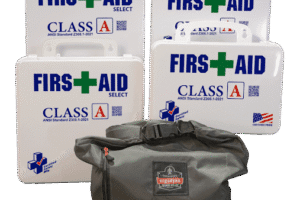
Dorm life runs on chaos and convenience, and that combination produces its fair share of minor injuries. A knife slips while cutting up snacks for a study session. New shoes turn a walk across campus into a blister factory. An all-nighter ends in a pounding headache. Someone leaves a curling iron on a little too long, or the dorm hot plate gets a little too hot.
None of this is an emergency. But it’s the kind of thing that’s a lot less annoying when there’s a bandage, some burn gel, or a pain reliever within arm’s reach, instead of a trip to the campus store or a text to mom asking what to do.
A different kind of “just in case”
Here’s the part of this post that’s a little less lighthearted, and intentionally so.
Overdose risk from opioids, including fentanyl found in counterfeit pills or substances a student didn’t even know were contaminated, is a real and growing concern on college campuses. This isn’t about assuming the worst about your student. It’s about being prepared for a situation involving them, a roommate, or a friend down the hall.
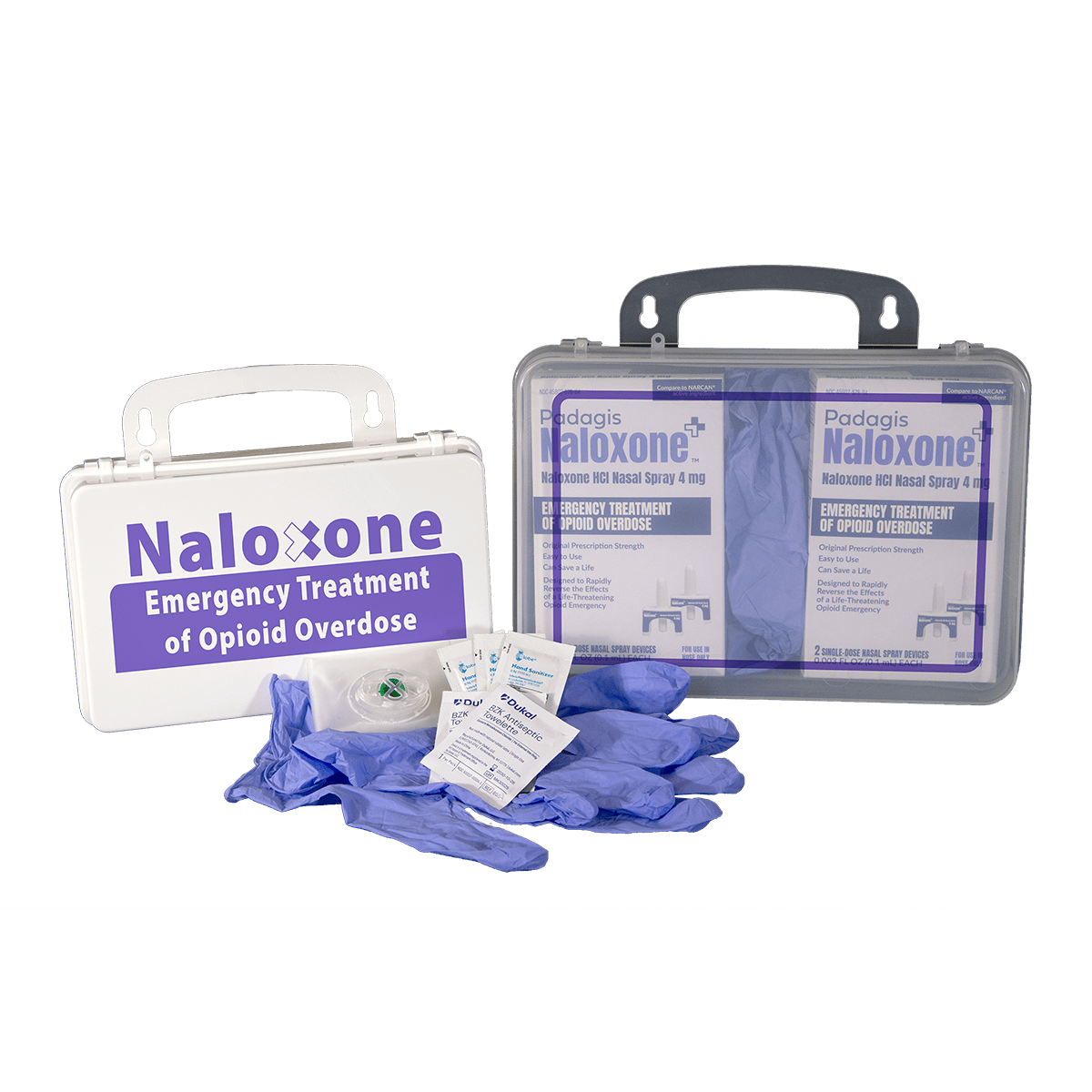
That’s where naloxone comes in. Naloxone is a medication that reverses the effects of an opioid overdose, and it’s safe, fast, and simple to use, even for someone with no medical training. Many colleges now recommend or actively distribute it, which tells you something: this isn’t fringe advice anymore, it’s becoming standard.
Think of it the way you think about a fire extinguisher. You hope your student never needs it. But if the moment comes, you’ll be glad it’s there.
Building a dorm-room First Aid kit that covers both ends
A solid dorm-room kit should handle the everyday stuff and the just-in-case, together.
- Everyday basics: bandages, antiseptic wipes, burn care, pain relievers, blister care. First Aid Kit, Class A 21 (Poly Box) (SKU: K622011) is a compact option built for exactly this kind of everyday use.
- The just-in-case: Naloxone Overdose Kit (SKU: K626002), kept somewhere easy to find and easy to grab.
- Refills: dorm kits get used more than people expect, so having refill supplies on hand means the kit stays ready all year, not just for the first month.
The bottom line
You’ve thought of everything else. Don’t let this be the one thing you forgot, in either direction.
Not sure where to start? Contact us to find the right First Aid kit for a college student.