


A workplace injury does not wait. Whether it is a laceration on a manufacturing floor, a chemical splash in a lab, or a fall at a construction site, the first few minutes of response determine outcomes – and employers bear direct responsibility for what happens in those minutes. That responsibility is codified in federal law, and failing to meet it carries real consequences.
Certified Safety MFG operates as an industrial safety manufacturer and compliance partner, specializing in ANSI-compliant first aid kits, replenishment programs, and workplace medical supplies. Serving commercial and industrial sectors for more than 50 years, the company protects workforce health through scalable safety solutions.
Learn more about maintaining OSHA first-aid compliance, understanding the current ANSI first-aid kit standard, and selecting between Class A 21 and Class B 21 kits for your facilities.
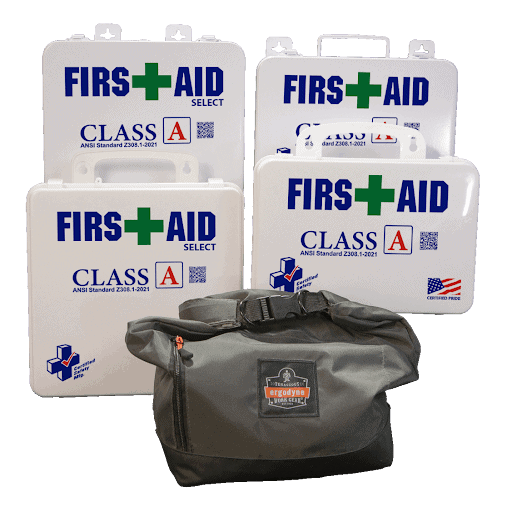
Why Compliance Matters
The regulatory framework is direct. Two bodies define the requirements: OSHA sets the legal mandate for employers, and ANSI establishes the content standard for the kits themselves. Understanding how both work together is the starting point for any compliant program.
ANSI Z308.1-2021 Explained
While OSHA sets the legal obligation, the ANSI first aid kit standard – ANSI/ISEA Z308.1-2021 – defines what must actually be inside a compliant container. ANSI is a voluntary standards organization, but OSHA cites ANSI guidelines as the recognized basis for adequate first-aid kit contents. In practice, purchasing a First Aid kit or cabinet that meets the ANSI First Aid kit standard is the clearest path to demonstrating federal compliance.
The 2021 revision updated minimum quantity requirements across several supply categories and introduced precise definitions for Class A 21 and Class B 21 configurations. The standard specifies minimum supply types and quantities rather than dictating container style, which gives employers flexibility in how they deploy and organize their medical stations. What cannot be flexible is the contents: a kit missing required items does not meet the standard.

All products from Certified Safety MFG meet or exceed the ANSI first aid kit standard, giving procurement teams a straightforward path to verified safety across their facilities.


